
Women’s Freedom and Royal Constraint
Ponniyin SelvanThis flow contrasts the freedoms Poonguzhali claims for herself with the confinement imposed on women in palaces and marriage politics.
increasing Bearing strength in each event
 decreasing
Bearing strength in each eventdecreasingThe Parrot’s Cage
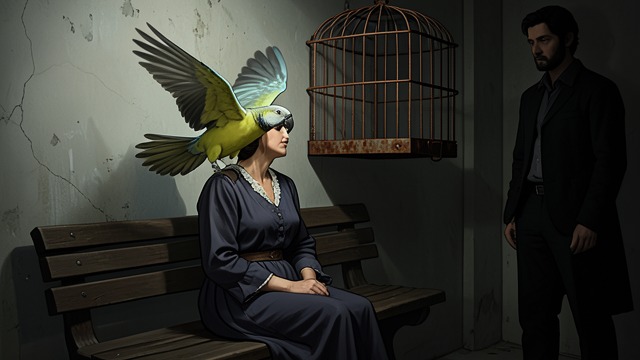
The Parrot’s Cage
Freedom imagined
Poonguzhali envies the parrot’s ability to fly and condemns princesses who keep birds in cages. She extends her anger to the women who control them.
A different kind of captivity
Amudhan argues that royal women are also trapped by palace rules and surveillance. The exchange complicates Poonguzhali’s belief that privilege always means freedom.
A Life Refused

A Life Refused
Marriage questioned
Poonguzhali asks what marriage would actually give her and rejects the domestic life Amudhan describes. She does not accept the idea that love must culminate in marriage.
Choice asserted
Her refusal challenges expectations that a woman’s security and purpose depend on a husband. Amudhan is hurt, but does not force her to reconsider.
A Captive in a Palanquin
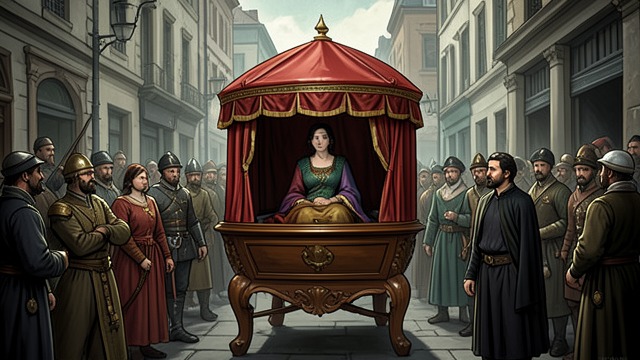
A Captive in a Palanquin
Power concealed by ceremony
Mandhakini is transported in a royal palanquin as part of Aniruddhar’s plan. The polished conveyance hides the fact that she has not been free to decide where she goes.
Agency reclaimed
She later chooses to leave the palanquin and directs Poonguzhali to take her place. The exchange reveals her ability to act within a system meant to contain her.
Nandhini’s Marriage Explained
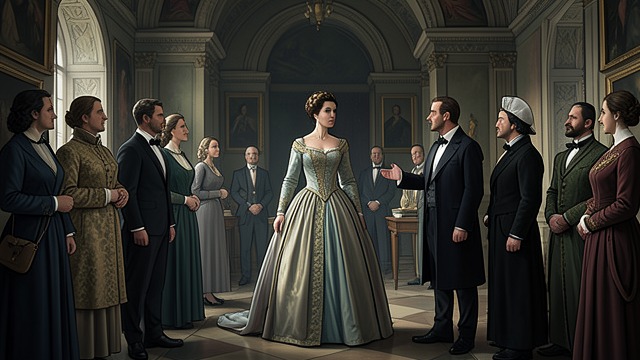
Nandhini’s Marriage Explained
A claim of coercion
Nandhini says that being taken into a palace against her will did not make her a willing wife. She describes her marriage as part of a purpose rather than a freely chosen union.
Public status and private will
Her position gives her influence, but does not prove consent or affection. The contrast challenges the assumption that rank and luxury erase a woman’s lack of choice.
A Wife’s Political Labor

A Wife’s Political Labor
Influence exercised indirectly
Nandhini persuades her husband to return to Thanjavur and claims responsibility for guarding his honor while he is away. Her arguments shape the movement of a major political figure.
Agency within constraint
She uses the authority available to her as a wife and queen, even as she describes her marriage as coercive. The tension makes her power neither simple freedom nor simple captivity.
During Poonguzhali and Amudhan’s boat conversation
During Poonguzhali’s rejection of Amudhan’s proposal
During the storm outside Thanjavur
During Nandhini’s conversation with Vandhiyathevan by the lake
During Nandhini’s conversation with Elder Pazhuvettarayar
